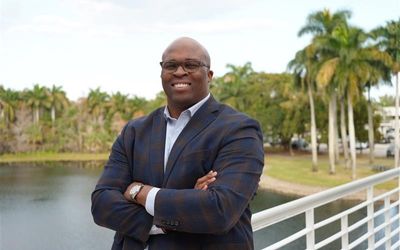
EAST LANSING, Mich. — Matthew Ihnken’s first classroom wasn’t a lecture hall or a lab. It was the lakes of northern Wisconsin, where summer was spent at a family cabin in Eagle River.
“We would spend two weeks in the pines,” he shares. “That’s probably what made me catch the outdoors bug.”
That passion never faded. It became a calling and a career.
More than 20 years later, Ihnken has built a life around solutions that improve ecosystems. Over the course of his work, he’s moved across the country, supporting species and habitats.
Early on, Ihnken thought his degree in fisheries, wildlife and conservation biology from the University of Minnesota may mean working with deer, elk and bears. Instead, early field opportunities pulled him into the world of threatened and endangered species.
“If you really want a job in wildlife, you have to be willing to move,” he says. “A lot of the early jobs are field positions.”
That willingness to follow the work directed Ihnken’s path.
After graduation, he landed a role in New Mexico raising Bolson’s tortoises.
“We raised baby tortoises and later transferred them to the Armendaris and Ladder Ranches to mature before they could be released into the wild in the Chihuahuan Desert,” he remembers.
The Bolson tortoise is widely described as North America’s largest and rarest tortoise, and conservation partners are trying to reintroduce it to portions of its historic U.S. range after years of local absence.
His career also carried him into forest ecosystems.
“I lived in Oregon and worked with the spotted owl,” Ihnken says.
Before joining NextEra Energy Resources, Ihnken was in a transportation biologist position at the U.S. Fish and Wildlife Service in Michigan.
“I got to work with all listed species, see how they interact, learn about their ecosystems and drive holistic conservation programs,” he shares.
One standout example is the eastern massasauga rattlesnake, a federally threatened species that relies on shallow wetlands and nearby uplands.
“When you conserve habitat for a species like the massasauga—wetland complexes and the surrounding uplands—you support many other species that depend on those same ecosystems,” says Ihnken.
That broader “landscape-level” mindset is a big reason he came to NextEra Energy Resources. As an environmental services project manager, he now supports wildlife research and stewardship work for the energy industry.
“We don’t just deliver energy,” he says. “We deliver benefits to wildlife and ecosystems at the same time.”
A major part of that work is collaborating with researchers who bring fresh ideas and rigorous methods to real-world questions.
One example sits in northwest Indiana at Jasper-Pulaski Fish & Wildlife Area, a nationally recognized stopover for thousands of sandhill cranes during migration. Through NextEra Energy Resources, Ihnken helped coordinate surveys that confirmed the crane migration remains unchanged in the region.
Another bright spot comes from academic collaborations with universities. In Arkansas, university-led surveys around project areas have produced notable findings, including a documented kingsnake species occurrence in an area where it had not been commonly recorded in recent decades.
Along the way, Ihnken has contributed to the conservation profession itself.
“I have been involved in the Wildlife Society for nearly two decades, including leadership roles in working groups and state chapters,” he shares. “This allows me to stay connected to what’s changing across the field and what’s working in practice.”
At home in East Lansing, the outdoors bug that started in Eagle River is now a family affair.
“My two daughters love to camp, and they love animals,” Ihnken says.
His wife, also a biologist, works in conservation at the state level.
Asked what keeps him motivated after two decades, Ihnken comes back to the start. Conservation provides the opportunity for the next generation to fall in love with the outdoors the same way he did.

Whether guiding energy policy or a Scout troop, David Bobzien’s compass points toward service—building connections across the communities and landscapes of the West.

Early-stage developer Matt Johnson draws on his Wisconsin roots to help rural communities thrive through new energy projects across his home state.

From a fishing trip to saving a sea turtle, IT colleagues Manuel Capiendo and Klark Balay turned quick action into a powerful act of conservation.