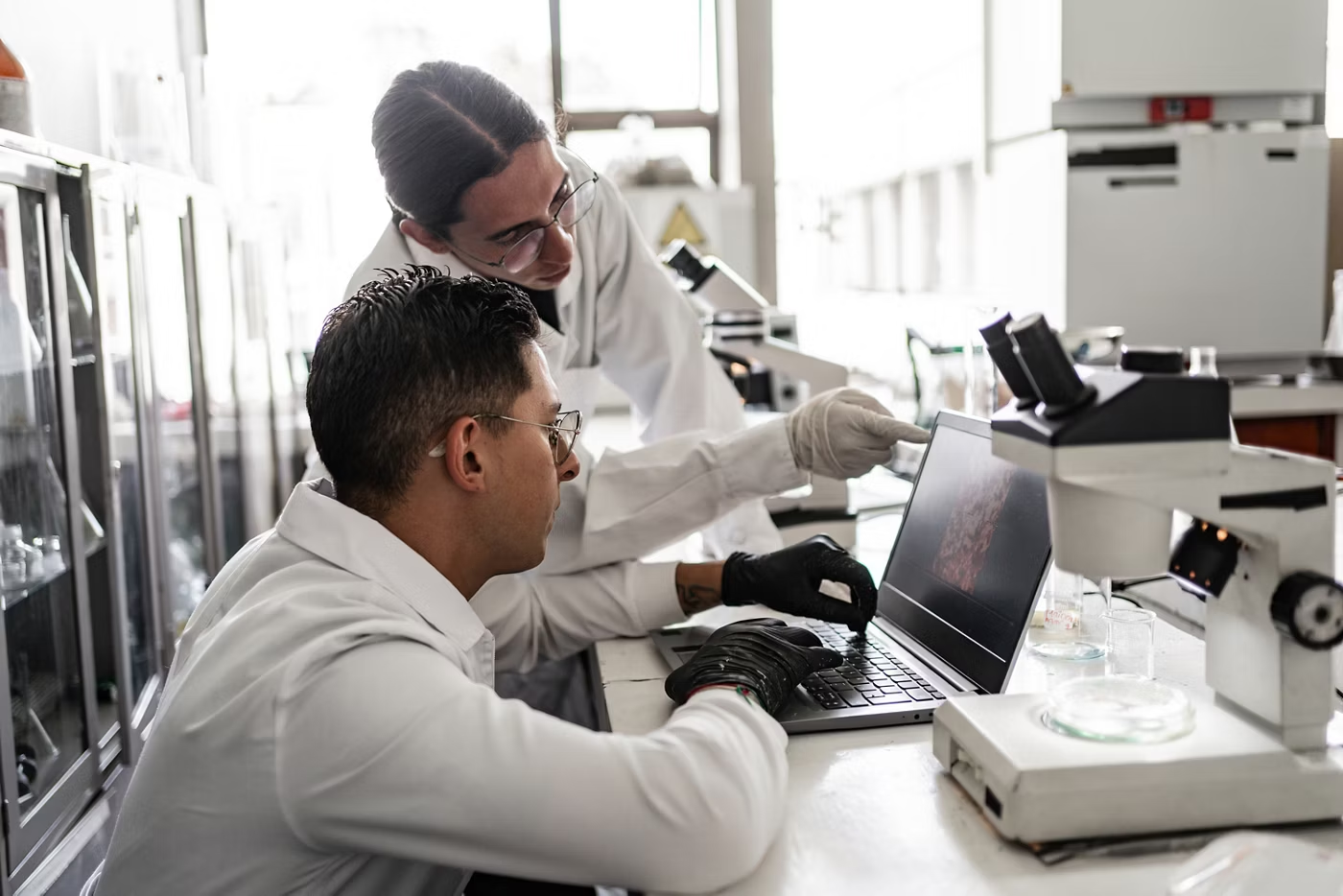


Your window into Astellas’ world of patient-centered and science-driven healthcare, as told by the experts who bring it to life.
Cell therapy is recognized as the next frontier of healthcare. Yet many challenges remain before the promise of breakthrough research can truly benefit patients.
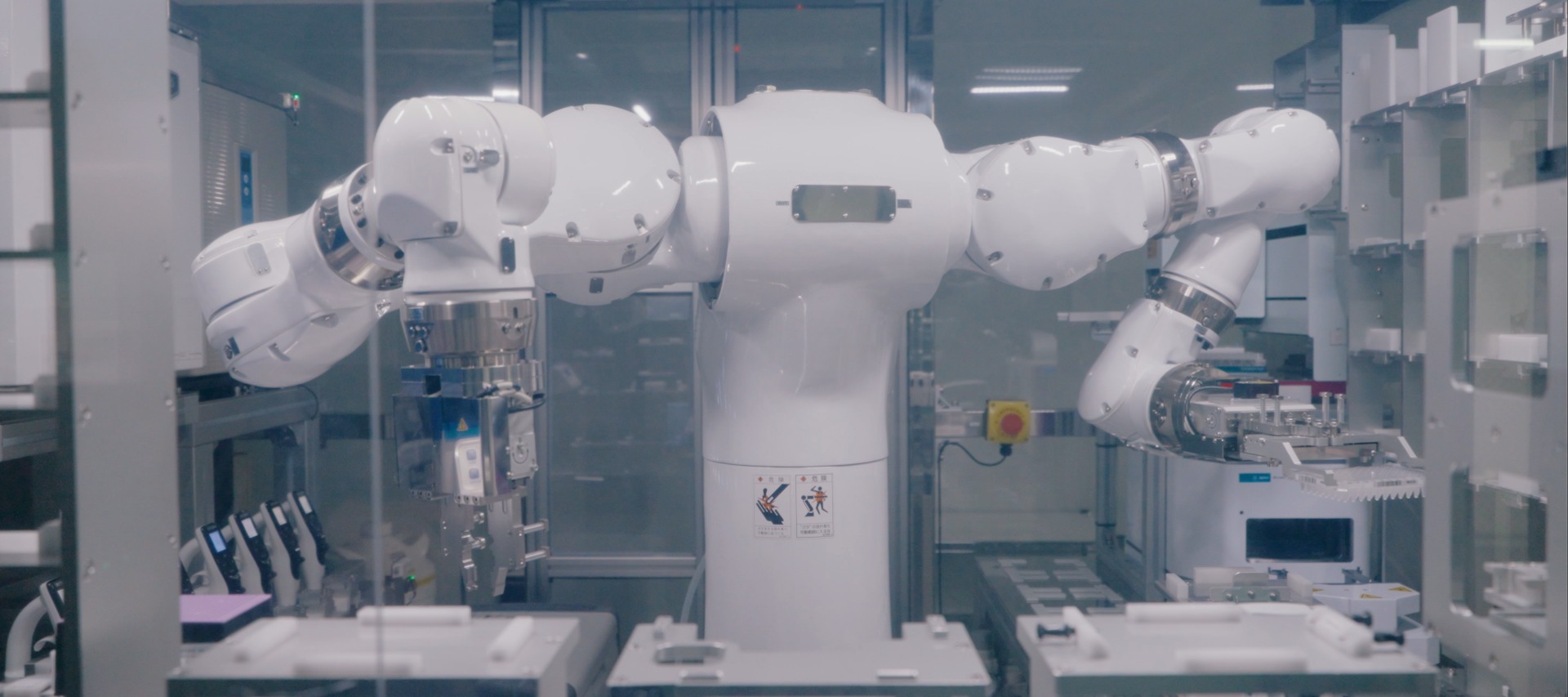
Astellas has partnered with YASKAWA Electric (YASKAWA) to establish a joint venture, Cellafa Biosciences Inc. (Cellafa), with a shared mission to address these challenges. At the heart of this initiative are a versatile humanoid robot named Maholo and advanced AI technologies that are set to redefine how cell therapies are developed. We interviewed Hideto Yamaguchi, President and CEO of Cellafa, and Jotaro Suzuki, Primary Focus Lead - Blindness & Regeneration at Astellas and Director of Cellafa, to explore how they aim to transform the production of cell therapies and deliver their full benefits to patients and society.
—First, could you tell us about the current cell therapy landscape and the challenges it faces?
Hideto Yamaguchi
President & CEO, Cellafa
Yamaguchi: In cell therapies, the source cells are naturally in the human body, in contrast to conventional pharmaceuticals which are defined by their chemical structure. This nature of cell therapy makes the product extremely delicate. Many steps in the manufacturing process still rely heavily on skilled manual handling, and small variations in culture conditions, such as temperature and timing, mixing methods, or even subtle differences in pipetting technique can influence the outcome. If a process can only be replicated by a specific individual, maintaining stable quality and building a reliable supply system becomes significant challenges — directly connected to the barriers of mass production and scaling-up.
Jotaro Suzuki
Primary Focus Lead -
Blindness & Regeneration,
Astellas
Director, Cellafa
Suzuki: Even when promising data emerge from research, development can often stall before a therapy reaches patients — a gap between basic research and real-world application known as the “valley of death.” Unless this gap is successfully bridged, even outstanding scientific achievements cannot deliver meaningful value to society. We are dedicated to confronting this challenge head-on.
—How did the joint venture come about?
Yamaguchi: Our journey began in 2017, when Astellas introduced “Maholo,” a versatile humanoid robot developed by Robotic Biology Institute, part of YASKAWA Group, for research applications. Initially, we regarded Maholo purely as a tool to support research. In 2020, however, we embarked on full-scale efforts to automate the manufacturing of cell therapies, and in about a year, we recognized the real potential of applying robotics technologies, including Maholo, to the production process.
Suzuki: We found that our existing collaborative frameworks had some limitations in seamlessly connecting research and development with manufacturing, ultimately to deliver products to patients. Establishing a joint venture was an important decision — not to make the technology exclusive to Astellas, but to contribute to the advancement of cell therapy industry. This approach has enabled companies with different strengths to collaborate as equals and create new values.
Yamaguchi: The initial phase of our collaboration required extensive discussions due to differences in business models and underlying assumptions. Over time, however, we discovered a shared ambition: YASKAWA's long-standing commitment to healthcare and our goal of bringing regenerative medicine into practical use. Astellas welcomes bottom-up proposals when they offer genuine value, and its culture of enthusiastically fostering innovation provided strong momentum for this effort. The shared pursuit of innovation became a driving force that propelled the project forward.
—What does Cellafa aim to achieve in concrete terms?
Yamaguchi: Our primary goal is to digitize and automate the manufacturing workflow including process development, enabling tasks once performed manually to be replicated by robots under identical conditions. Process data are gathered to visualize and identify the factors that impact quality. A key feature of Maholo is its dual-arm humanoid design, which allows it to carry out the same procedures as human operations using standard laboratory equipment. This eliminates the need for custom-made tools and enables automation to be introduced without significant changes to existing procedures.
Suzuki: It also accelerates process optimization dramatically. The combination of digitized data and AI enables continuous improvement cycles. AI recommends the next conditions to test, the robot conducts the experiment, and the results are analyzed to inform the subsequent steps. By repeating this cycle at high speed, we can build a cell manufacturing process that delivers high reliability and reproducibility.
Yamaguchi: In the past, many manufacturing steps depended heavily on the experience of skilled professionals, making technology transfer complex and requiring hands-on support when expanding to new sites. Once manufacturing processes are standardized as data and replicated through robotics, technology transfer becomes far more straightforward. This capability makes expanding facilities and enhancing supply systems much more feasible — bringing cell therapy closer to becoming a practical and widely accessible treatment option rather than something exceptional.
—In what ways is Cellafa different from a contract manufacturing company?
Yamaguchi: We foster a co-development environment well suited for new cellular therapies, which helps our partners to grow their assets to realize their value in the market. It goes well beyond a traditional “fee-for-service” business model of CDMO – a Contract Development and Manufacturing Organization. At Cellafa, we refer to our business model as PRDMO – Partnership, Research, Development, and Manufacturing Organization, where we walk with partners throughout the stages from process development to manufacturing as a driving force.
Suzuki: In cell therapies, researchers and startups often encounter significant challenges in areas such as quality control and regulatory compliance. Our aim is to develop this platform as an open ecosystem, providing an environment where diverse companies and research institutions can leverage their capabilities. By fostering collaboration and delivering shared value, we seek to contribute to the advancement of the entire industry.
—What VALUE do you believe Cellafa can deliver to patients through that structure?
Suzuki: Our top priority is to enhance our capability to consistently deliver safe, high-quality cell therapies to patients. Leveraging robotics can help minimize variations in quality, while improving efficiency in research and development and success rates in manufacturing may also help optimize treatment costs. As processes become standardized, this will enable us to deliver the same level of quality in Japan and across the globe, expanding access to more patients worldwide.
―What's the outlook for the future?
Yamaguchi: In April 2026, we plan to launch research support services, followed by the manufacture of investigational products using Cellafa's platform by early 2028. We are also considering overseas expansion, aiming to build a global system that enables faster technology transfers across distances, further enhancing the value our platform can deliver globally.
Suzuki: Cellafa aims to become a hub where diverse stakeholders come together. Our goal is to turn innovative technologies into meaningful VALUE for patients and to advance cell therapy. By connecting new technologies with a wide range of partners, we hope to become an engine that drives the realization of previously unattainable therapeutic possibilities.
Yamaguchi: As robotics and AI reshape society, we see ourselves as active participants in this transformation. Guided by a data-driven approach that places collected data at the center of our decision-making, we are integrating autonomous AI and robots, along with seamless collaboration between humans and machines, into research, development, and manufacturing of cell therapies. Through these efforts, Cellafa seeks to lead an industrial revolution in cell therapies and be a driving force behind that change.
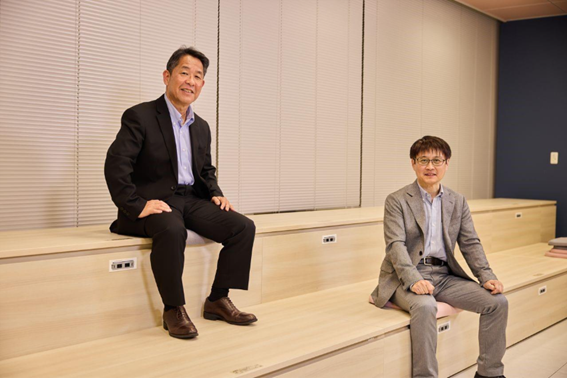
Founded by Astellas and YASKAWA, Cellafa has the potential to be a game-changer for cell therapy. By combining pharmaceutical expertise with robotics and AI technologies, this initiative connects research outcomes to tangible societal value and marks an important step forward in the advancement of cell therapy.

Follow us